
Martinique, 1897... In the bustling streets of Saint-Pierre and the markets of Fort-de-France, an unusual coin begins to circulate. It is made neither of silver nor gold, but of cupronickel, a modest metal. Yet it proudly bears the likeness of a Martinican woman in traditional dress, rather than Marianne or the French Republic. On its reverse is an intriguing inscription: “CONTRE-VALEUR DÉPOSÉE AU TRÉSOR”. Article written by Pier2 and translated using artificial intelligence.
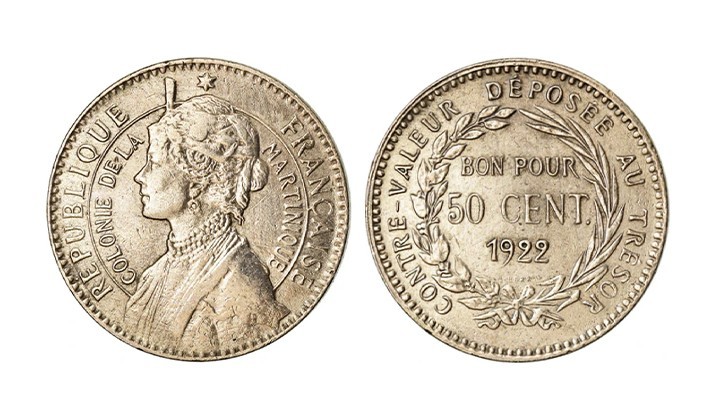
This coin is an emergency bond, a makeshift solution designed to ease a monetary crisis that is stifling the colony. Yet beyond its face value, it tells a much larger story: that of an island seeking autonomy, a population that was initially wary but eventually won over, and a cultural symbol rarely seen within the French colonial empire. How did these coins, struck in Paris but designed for Martinique, leave their mark on the island’s economic history and identity? Let us explore the little-known story of the 50-centime and 1-franc cupronickel coins that dared to challenge the conventions of metropolitan France.
In 1897, Martinique’s Colonial Treasury was authorised to issue cupronickel bonds (an alloy of copper and nickel, cheaper than silver),with a countervalue guaranteed by the State and deposited with the Treasury. Although technically emergency currency, these bonds were legal tender on the island. Values issued: 50 centimes and 1 franc – Mint: Monnaie de Paris (bearing the signature of engraver Alfred Borrel) – Metal: Cupronickel (75% copper, 25% nickel), giving them their characteristic greyish-white colour. Cupronickel, less expensive than silver, was already used for other colonial currencies. Its use for the Martinican coins reflected both an economic necessity and a desire to distinguish these bonds from metropolitan silver coins.
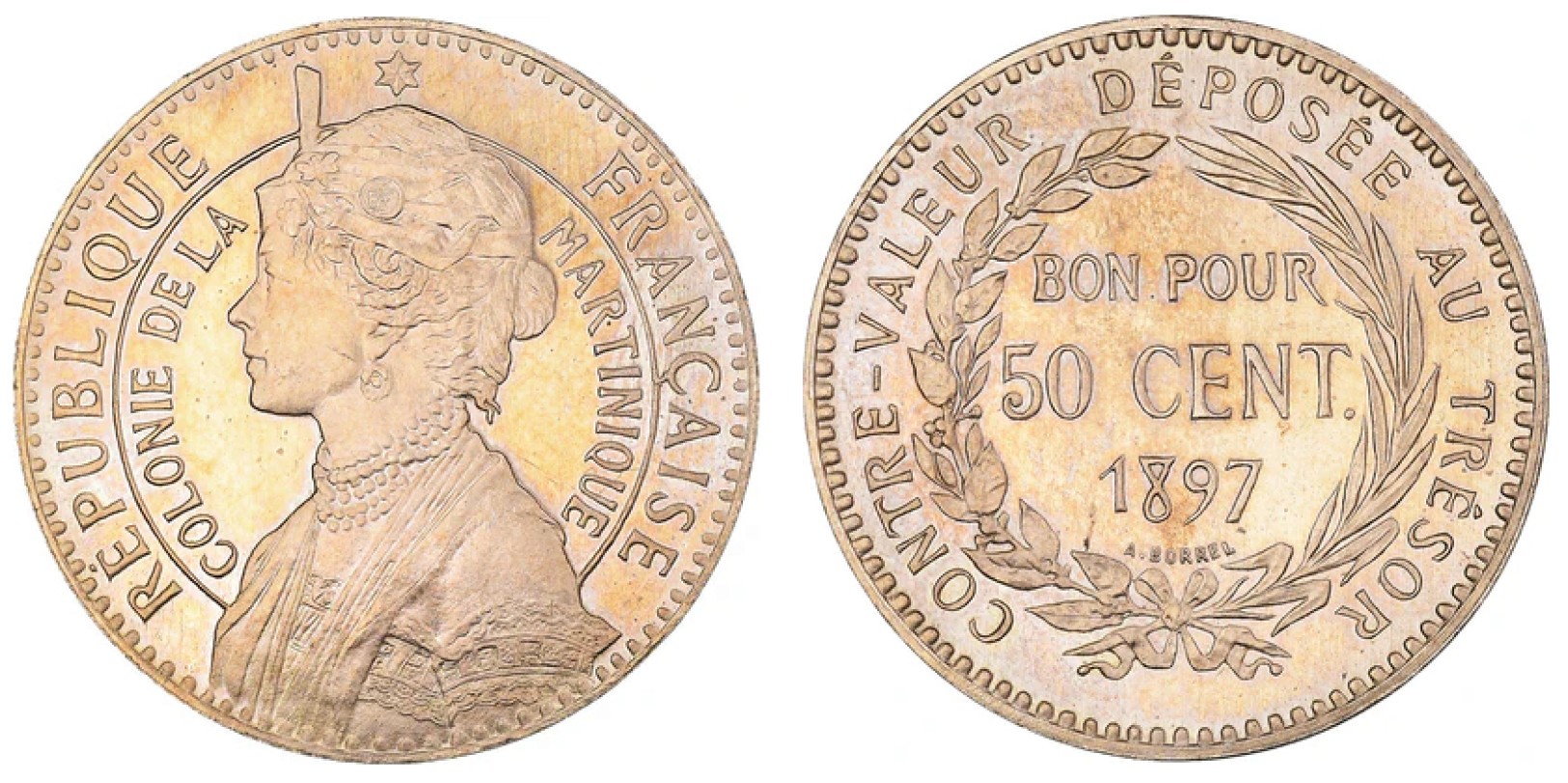
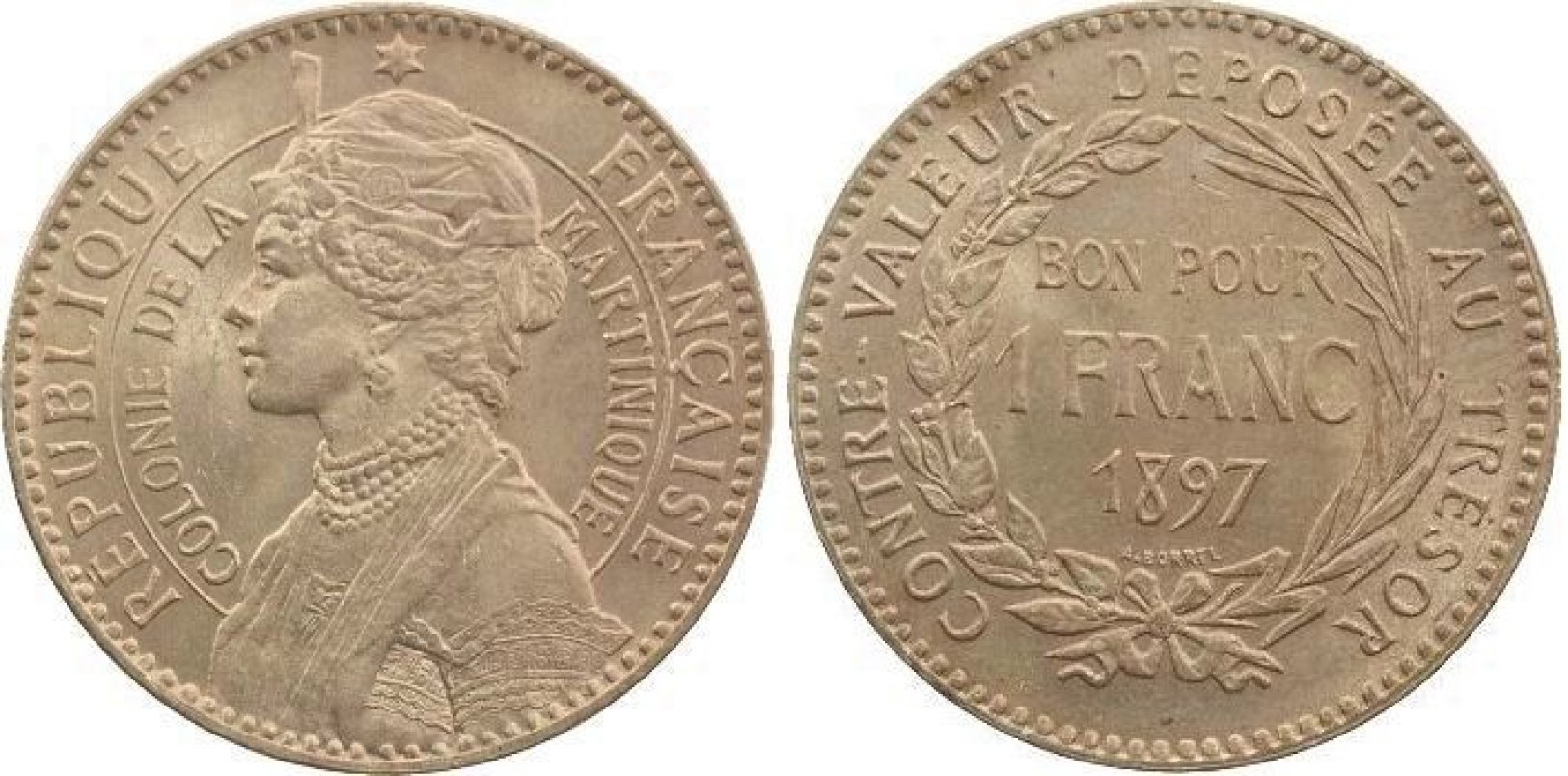
Unlike metropolitan coins, which often depict Marianne or the Republic (wearing a Phrygian cap), the Martinican bonds feature on the obverse the bust of a Martinican woman dressed in traditional local clothing (a tied headscarf, a flounced dress, a necklace and earrings). Engraver Alfred Borrel, already known for his work on other colonial coins, elegantly captured the features of a Martinican woman, thereby breaking with the traditional conventions of the Monnaie de Paris.
This representation was exceptional for its time, as it departed from the classic symbols of the Republic to highlight a local identity, accompanied by the circular inscription: RÉPUBLIQUE FRANÇAISE – COLONIE DE LA MARTINIQUE” (“FRENCH REPUBLIC – COLONY OF MARTINIQUE”).
Why was this choice made? Was it a form of symbolic recognition?
The bust may reflect a desire to express a sense of belonging both to France and to Martinican culture, in a colonial context in which local representations were rare. It may also have encouraged popular acceptance: a familiar figure could indeed make it easier for the population to adopt these coins.
– On the reverse: “BON POUR [50 CENT. / 1 FRANC] – CONTRE-VALEUR DÉPOSÉE AU TRÉSOR” (“BOND FOR [50 CENT. / 1 FRANC] – COUNTERVALUE DEPOSITED WITH THE TREASURY”), surrounded by a wreath of oak and laurel, with the year (1897 or 1922).
Martinicans, accustomed to silver as a precious metal, were sceptical of these cupronickel bonds, which they regarded as a “substitute” or “crisis” currency. Some traders, particularly in rural areas, refused to accept them. The colonial authorities and the local press (Les Antilles, L’Écho de la Martinique) emphasised their legal status and the guarantee provided by the public Treasury. Official explanations in the form of posters, although none have been found, were circulated to reassure the population.
The shortage of small-denomination currency encouraged their use, particularly for minor transactions such as wages and everyday purchases. Public offices, including post offices and tax offices, as well as local businesses, accepted them. Cupronickel was more resistant to wear than silver, which worked in their favour. Counterfeits made of lead or tin even appeared, forcing the authorities to strengthen their inspections. Some were so crude that they could be identified with the naked eye, while others, more sophisticated, circulated for a long time before being detected.
Over time, the coins were eventually accepted, particularly because of their durability (cupronickel is more resistant to wear than silver) and their practical usefulness for small everyday transactions, such as buying food at markets or paying wages. In 1922, a new shortage of small-denomination currency, perhaps linked to the economic upheaval caused by the First World War (1914-1918), led to the minting of a further 500,000 examples. After 25 years in circulation, Martinicans were more familiar with these bonds, which became a commonly used currency.
Today, the cupronickel bonds of 1897 and 1922 are no longer in circulation. They ceased to be legal tender in the 1930s, although some continued to circulate until the 1940s. They were replaced by metropolitan coins and then by the franc, before finally disappearing from Martinicans’ pockets in favour of the euro in 2002. Yet their legacy, both in metal and in memory, lives on.
These coins are far more than simple monetary objects. They bear witness to a time when Martinique had to innovate in order to survive, and when a woman in traditional dress represented the colony on an official coin for several decades. They suggest that, even within a rigid colonial system, spaces for creativity and resistance existed.
Now silent in collectors’ display cases, these coins still seem to whisper a question: “Today, as Martinique continues to seek its place within the Republic, these coins remind us that identity is also shaped by details… such as a portrait on a coin!”
Discover the Martinique coins for sale on Delcampe!


