

In most countries, identifying the first stamp is straightforward. While the United Kingdom proudly points to the 1840 Penny Black and France to the 1849 Ceres issue, in Hungary the question is a constant subject of debate. Why is this so? Worldwide postal reforms and the spread of postage stamps took place in the mid‑19th century, at a time when Hungarian history was particularly turbulent. In the 17th century, the century‑and‑a‑half of Ottoman rule was replaced by Habsburg domination. Dissatisfaction among Hungarians grew steadily; they demanded reforms and independence, and on 15 March 1848 a revolution broke out in Hungary.
One aim of the new Hungarian government was to reform postal services along the English model, making them accessible to everyone. Lajos Kossuth, Minister of Finance, commissioned the young Hungarian painter Mór Than to design Hungary’s first postage stamp — and he did.
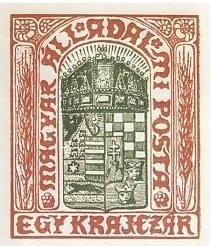
1848. Mór Than’s stamp design
Postal Museum, Budapest (original ink drawing later coloured based on the designer’s notes)
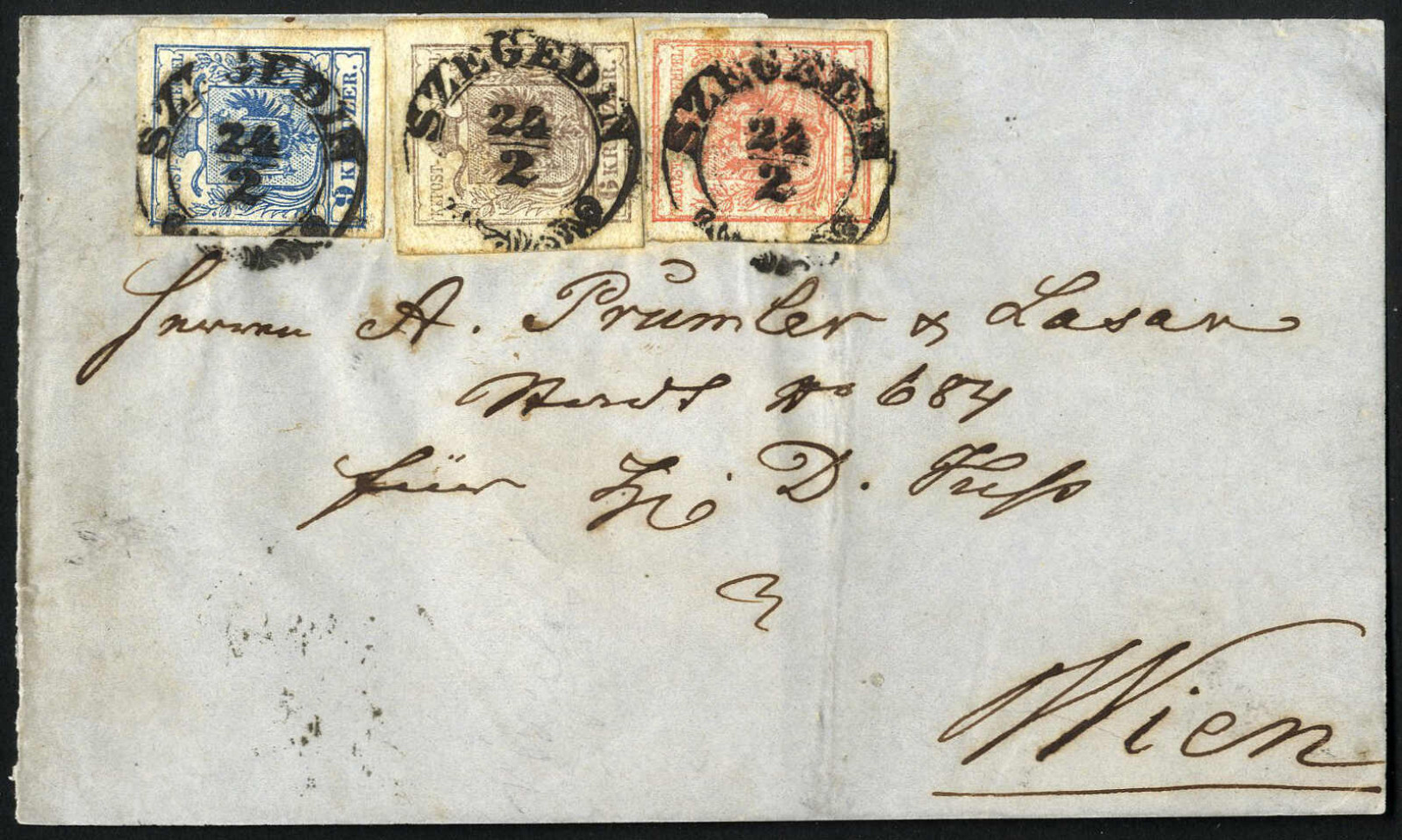
1850 Austrian typographed stamp with SZEGEDIN (now Szeged) cancellation.
(Viennafil Auktionen, 2025, 100th Viennafil Public Auction)
The Hungarian Revolution and War of Independence collapsed in the autumn of 1849. With Russian military assistance, the Habsburgs defeated the Hungarian forces, followed by bloody reprisals. Independent Hungarian postal administration remained only a dream, and Than’s stamp design never appeared. Had it been issued, Hungarians would have preceded the Austrians — or even the French — and would have competed strongly for the “most beautiful first stamp” title. Instead, it remained a symbol of the struggle for independence.
.
After 1849, Hungary effectively became part of the Austrian Empire, where in 1850 the first stamps were issued: a set of five imperforate, typographed definitives depicting the Habsburg coat of arms. These stamps were used throughout the empire. Thus, in practice, these are the first stamps used in Hungary — though they are Austrian, not Hungarian. Nevertheless, most Hungarian collections begin with these, as well as the Austrian stamps of the following 20 years, but only when the postal cancellation clearly indicates that they were used in a Hungarian post office
After Austria’s defeat in the Austro‑Prussian War, the empire was militarily and economically weakened, and its unity was in danger. Emperor Franz Joseph knew that without a settlement with the Hungarians the Habsburg Empire might fall apart. This led to the Compromise of 1867, which was both necessity and opportunity: for Austria, a chance for survival; for Hungary, the partial restoration of independence. The Austro‑Hungarian Monarchy was created, with two equal states: Austria and Hungary. Postal services became part of the autonomously governed areas placed under the Hungarian Ministry of Agriculture, Industry and Commerce.
The newly autonomous Hungarian Post naturally planned to issue its own stamps, but faced the harsh reality that Hungary lacked any facility capable of mass‑producing stamps. Therefore they were forced to cooperate with Austria, and the first stamps ordered by Hungary were produced in Vienna. Moreover, Austria also issued the same designs throughout other territories of the Monarchy, creating a peculiar situation in which both countries circulated identical stamps. Legally, these may be considered the first Hungarian stamps — but only the examples cancelled with Hungarian postmarks are regarded as such in modern philatelic literature.
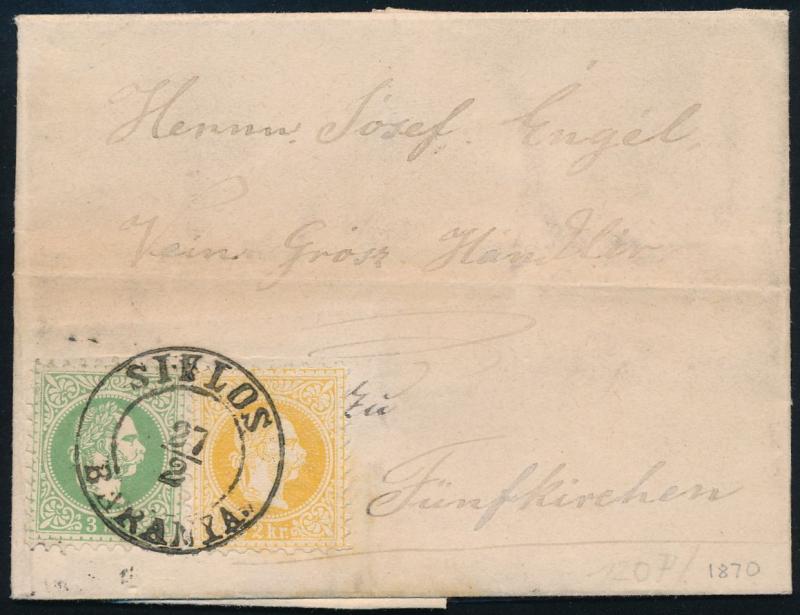
1867 Typographed issue with SIKLÓS/BARANYA cancellation
(Darabanth Auction House, 2024 Autumn Major Auction)
Finally, the first stamps produced for a Hungarian order and printed in Hungary were issued in 1871. In addition to the ruler’s portrait, they already featured Hungarian national symbols: the coat of arms and the Holy Crown. All catalogues consider these the first Hungarian stamps. But as you might expect — even these brought difficulties.
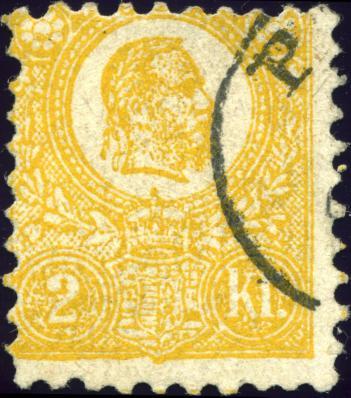
1871 Lithography – “Spotted Joseph”
Postal Museum, Budapest
Originally, the stamps were intended to be recess‑printed, but due to tight deadlines and delays in acquiring the necessary machinery, the Post was forced to opt for lithography, resulting in poorer image quality. The first chrome‑yellow 2-krajcár lithographed stamps were so poorly printed (the ruler’s portrait appeared speckled with dots) that all 8 million printed copies were ordered to be destroyed. A few, however, entered circulation — these are known as the “Spotted Joseph” stamps. Today, their value may reach 2.5–3 million forints.
The lithographed stamps’ appearance and quality fell far short of expectations, so between July and August 1871 production shifted to recess printing. For this reason, lithographed examples are much rarer — and therefore more valuable — than recess‑printed ones. Yet every catalogue lists the 1871 lithographed issues as the first Hungarian stamps.
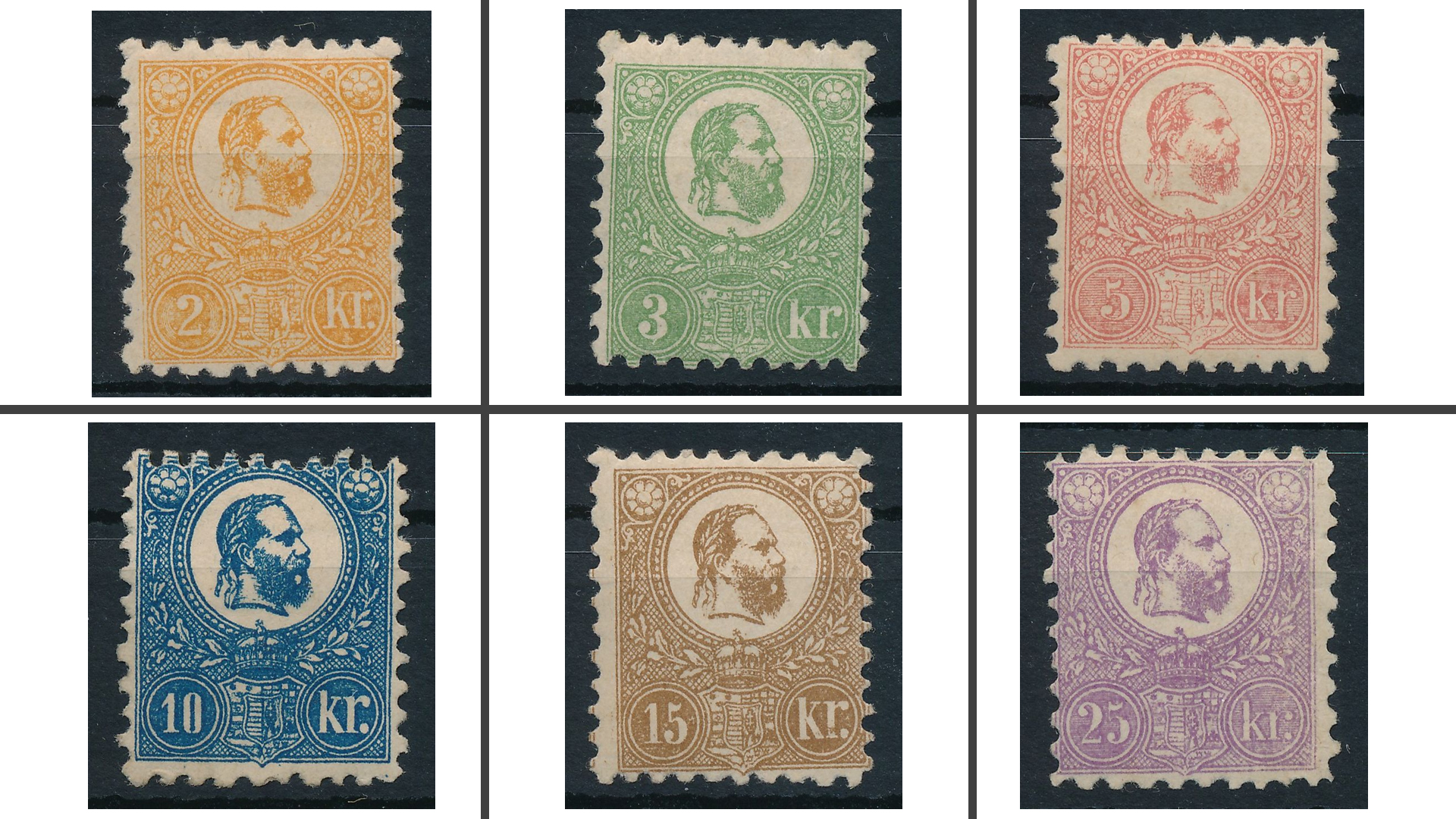
1871 Lithographed issue
(Darabanth Auction House, 2025 Autumn Major Auction)
What one considers the “first Hungarian stamp” depends entirely on one’s perspective: legal, philatelic, practical — or perhaps a romantic approach that regards the unissued 1848 design as the true beginning. What is certain is that even a seemingly simple question may yield a complex answer — and in exploring it, we learn much about the history of a nation. This is what makes philately beautiful.
Discover more articles on https://belyegbarat.hu/.





Very interesting